
Last updated November 21, 2026
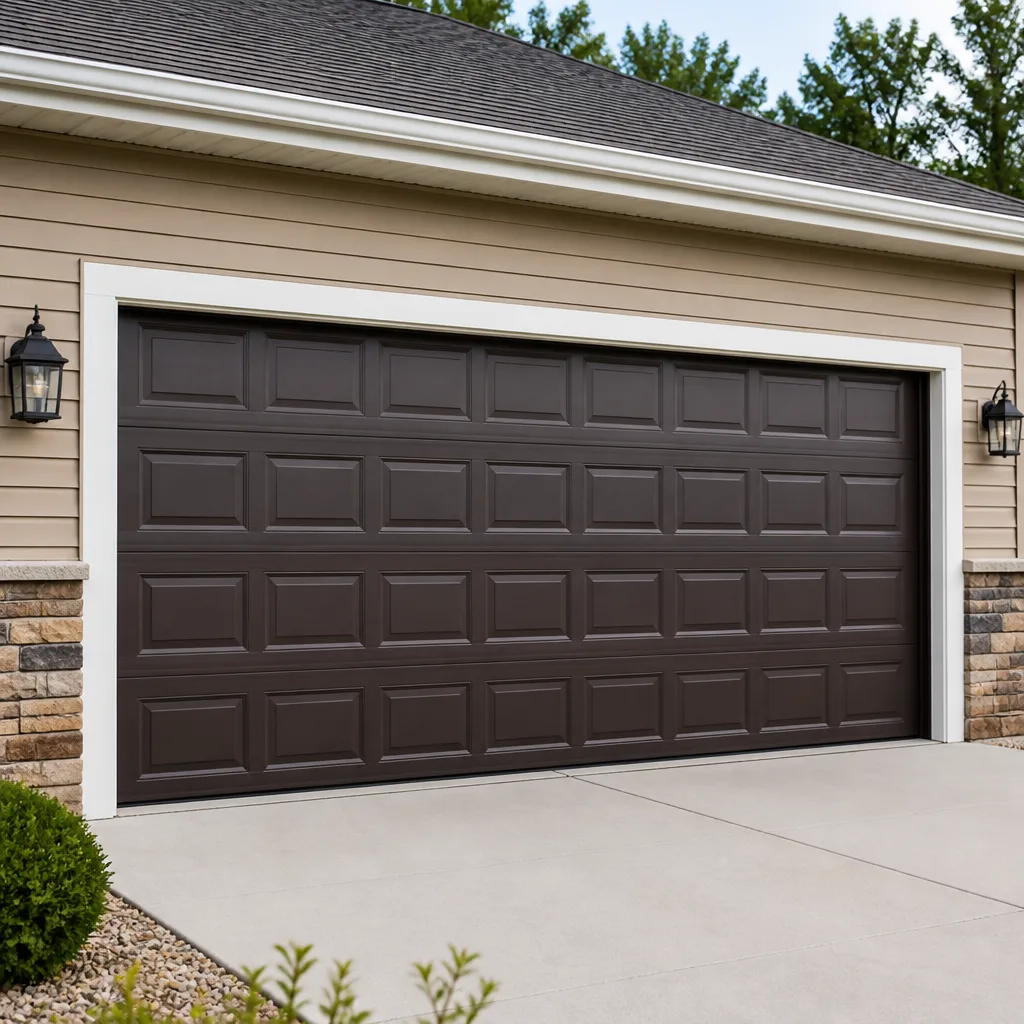 Raised-panel steel
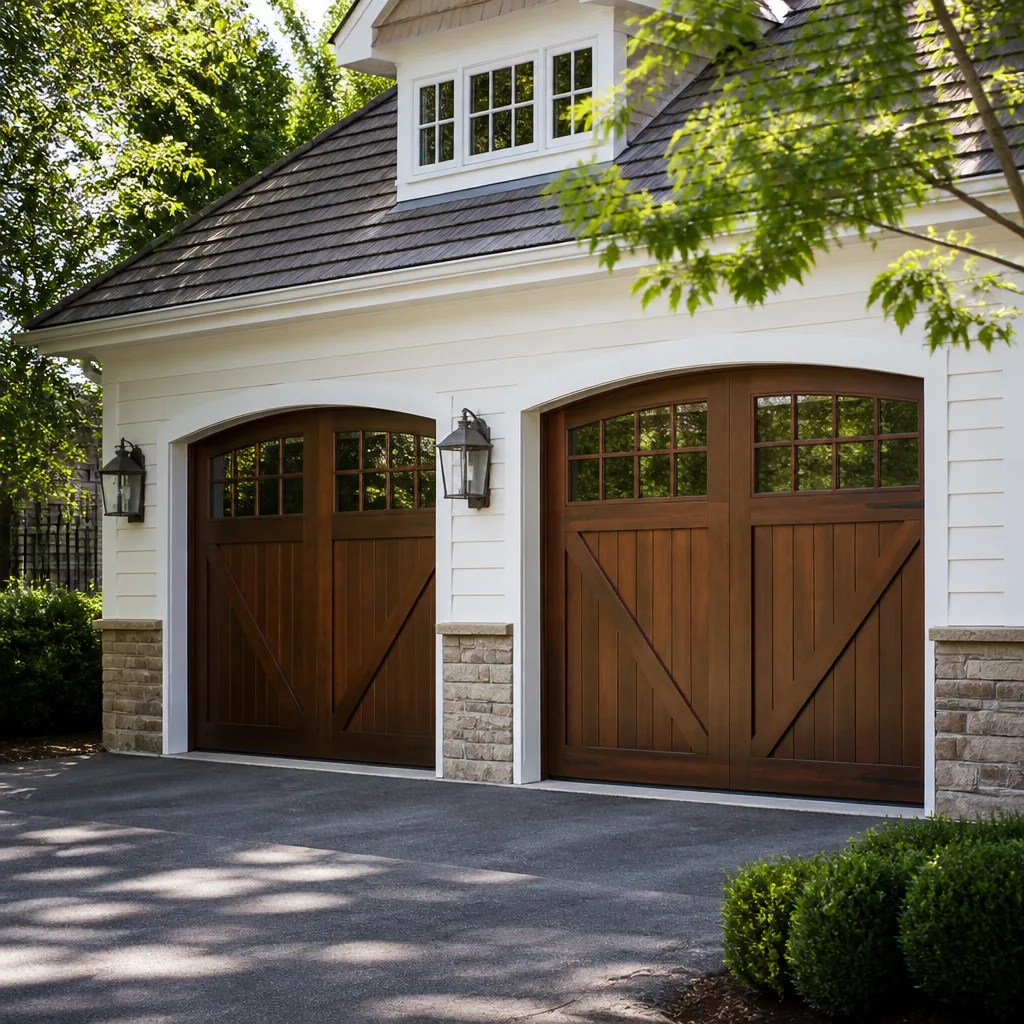 Carriage house
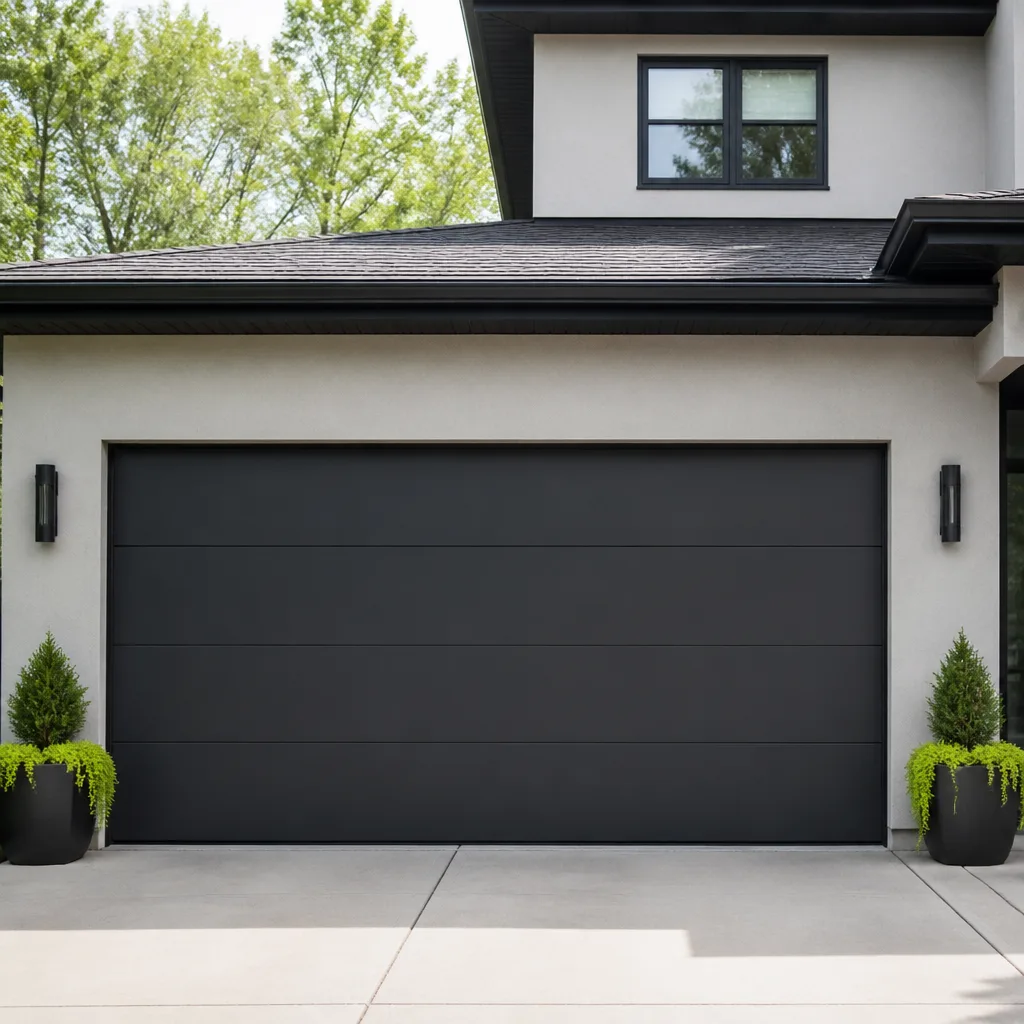 Modern flush
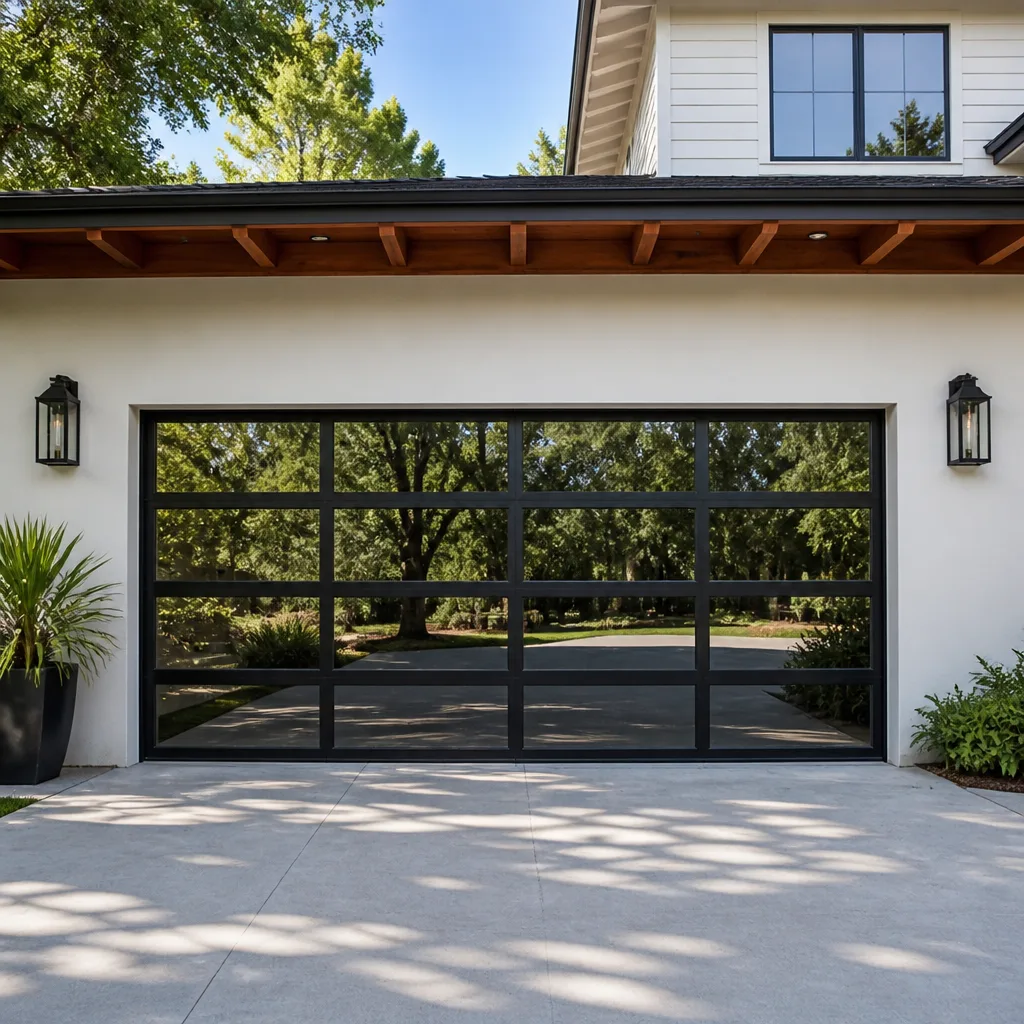 Full-view glass
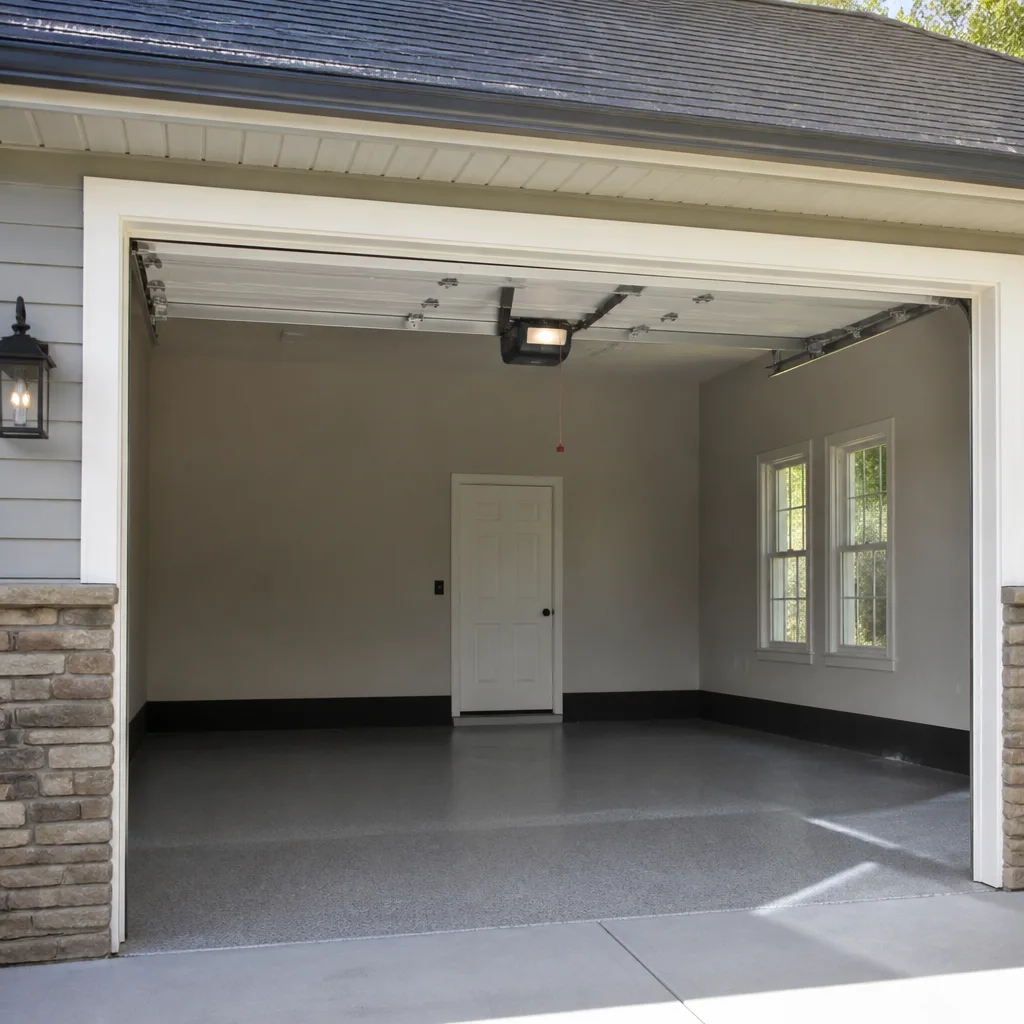 LiftMaster openers
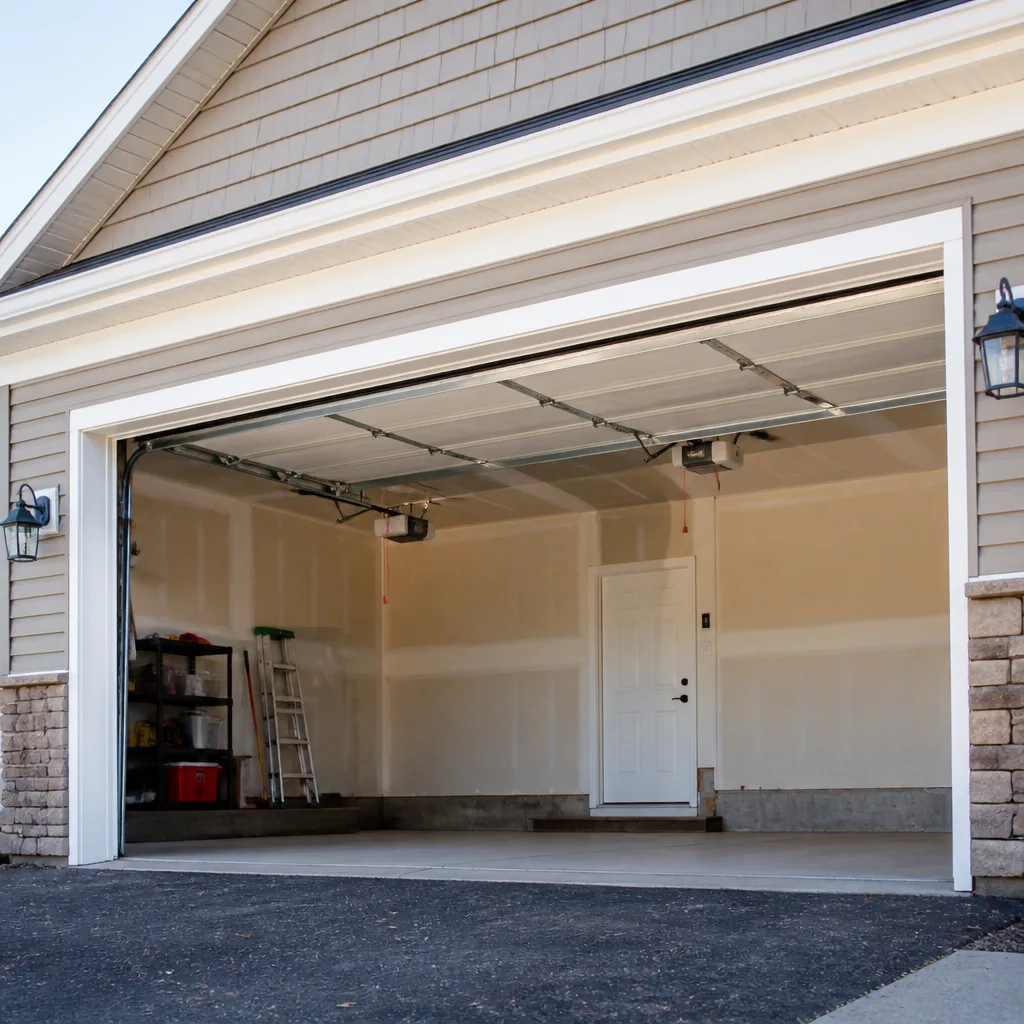 Chamberlain openers
Full 25-point door and opener safety check with every visit - springs, cables, rollers, tracks, and your LiftMaster or Chamberlain opener included
You get a price before we start. It does not change when the pro arrives.
Get your free estimateThe Complete Guide to Garage Doors in Mount Greenwood
Most Mount Greenwood garages were built before the residential garage door settled into a standard. That single fact explains more about the jobs on this block than any buying guide you’ll read online. Plenty of homes here have openings that are shorter, narrower, or shaped differently than what a modern door manufacturer expects, and the big-box “standard install” quote often falls apart once someone actually measures the frame. This guide starts where those generic articles stop: with the buildings themselves. We’ll walk through how mid-century bungalow and brick two-flat garages differ from the modern standard, how alley-access layouts change the way a door and opener need to work, and how to read your existing hardware so you know what you’re dealing with before you call anyone. If you’re sorting out a replacement or a repair in Mount Greenwood, this is the context you’ll want.
Quick Answer
A garage door in Mount Greenwood usually needs a repair when the panels, tracks, and springs are sound and one component has failed, and it needs a full replacement when the opening itself is undersized or the door hardware is past economical repair. Because many Mount Greenwood garages predate the 7-foot standardized door height, replacement often requires a custom-size door or low-headroom hardware rather than an off-the-shelf unit. Diagnosis should always start with the existing frame and hardware, not with a catalog.
Styles & brands we work with
- Raised-panel steel
- Carriage house
- Modern flush
- Full-view glass
- LiftMaster openers
- Chamberlain openers
Table of Contents
- How Mount Greenwood’s Housing Stock Shapes Garage Door Choices
- Mid-Century Bungalow Garages vs. Modern Standard Dimensions
- Alley-Access Garages on the Southwest Side: What’s Different
- Which Brands Offer Low-Headroom Configurations for Tight Garages
- How to Read Your Existing Hardware Before You Call Anyone
- Repair or Replace? How to Make the Economically Sound Call
- Springs, Cables, and the Safety Stakes You Can’t Skip
- The Full Service Spectrum, Explained
How Mount Greenwood’s Housing Stock Shapes Garage Door Choices
The housing stock in Mount Greenwood is dominated by two building types: the mid-century bungalow and the brick two-flat. Both were designed and built in an era when a garage was a fairly simple box, often detached, often sitting off the alley. Nobody designing those buildings was thinking about a 7-foot-tall insulated steel door on a torsion spring with a smart opener. They were solving for a horse and buggy era that had passed, or for a single car that was smaller than today’s. That history is still embedded in the openings, the framing, and the headroom of the garages on the block.
What that means practically is that a door replacement in Mount Greenwood is rarely a straight swap. A modern door manufacturer builds to a set of standard sizes, and standard dimensions don’t always match a mid-century frame. Two things can happen. Either the door has to be ordered in a custom size, which adds lead time and cost, or the existing opening gets adjusted, which is framing work on top of the door install. Neither is a crisis, but both belong in the estimate, and neither shows up in a “standard install” quote pulled from a big-box store.
The other variable is the garage’s role. In Mount Greenwood, a lot of these detached garages sit on the alley and open straight into it, and that changes how much clearance the door track needs and how the opener is placed. If your garage was built with a low ceiling or limited depth, the door has to be engineered for that space rather than forced into it. That’s the part of the job a generalist tends to underestimate.
We’d rather solve for the building you actually have than the building a manufacturer wishes you had. If you need a fresh look at a door that’s been fighting its frame, Garage Door Repair Mount Greenwood starts with the opening, not the catalog.
Mid-Century Bungalow Garages vs. Modern Standard Dimensions
A modern residential garage door standard is roughly 7 feet tall and 8 to 9 feet wide for a single car, and a larger opening for a double. Mount Greenwood garages built decades earlier often fall short of that, either in height, width, or both. A door that’s a few inches shy of standard is not unusual here. It’s the norm.
Why does that matter? Because around that standard size a whole mini-economy was built. Stock doors, stock springs, stock track kits, stock openers. When your opening doesn’t match, every one of those stock parts has a chance of not fitting, and each mismatch is a place where a careless estimate becomes an expensive correction later. To handle it well, the measure has to happen first, on-site, with the actual frame.
Here’s what we look at on a mid-century opening in Mount Greenwood:
- Headroom. How far is it from the top of the opening to the ceiling? Low headroom changes the track and spring configuration.
- Side room. How much space on each side of the opening is there for the track and the torsion hardware?
- Backroom. How deep is the garage? A short garage can’t take a standard horizontal track, so the door may need high-lift or low-headroom hardware.
- Opening dimensions. Actual height and width, measured at the widest post, not just where it looks right.
- Framing condition. Is the existing frame square and plumb, or has it settled? An out-of-square opening needs fixing before a new door can ride true.
The right measure takes a few minutes. Skipping it is what produces the door that arrives the wrong size. If you’re weighing a replacement, a real measure and a written price are the starting point, not the final surprise. You can read more about that process on our garage door installation page.
Alley-Access Garages on the Southwest Side: What’s Different
Alley-access garages are deeply part of how Mount Greenwood works. They’re behind the house, opening onto the alley, and that layout creates a handful of considerations that a front-facing suburban garage simply doesn’t have. None of these make an alley garage harder to work on, but they change the planning.
Clearance to maneuver. An alley is tight. There’s less room between the door and the fence across from it, which means the door has to lift fully and the opener has to reverse properly. A door that leaves a few inches hanging at the top because the track was set poorly is a daily annoyance on an alley lot.
Sight lines. On an alley-access garage, someone backing out can’t see as far as a driveway-facing garage would allow. A properly adjusted opener and a safety-reversing system that actually works matters more here, because the margin for error is smaller. When we tune an opener on an alley garage, we’re checking the reversing behavior under real conditions, not just pressing the button.
Opener placement and wiring. Alley garages are often detached and sometimes not well-wired. An opener needs a power source and safe routing, and the placement of the head unit and the wall control affects how usable the door is day to day. A garage with no opener wiring isn’t a problem, it’s just a line item that belongs in the estimate.
Weather exposure. A detached alley garage is exposed to the same Chicago-area freeze and thaw as the house, only without the benefit of being attached. Doors and hardware on alley garages tend to show wear sooner, which is one reason a seasonal look at the springs, cables, and rollers is worth doing. If a component has failed and you’re deciding how to proceed, our garage door repair service covers the full alley-garage setup.
Which Brands Offer Low-Headroom Configurations for Tight Garages
Not every manufacturer makes hardware for a short garage ceiling, and that’s the practical filter when you’re choosing a door for a Mount Greenwood bungalow with limited headroom. The brands worth exploring for tight openings are the ones that offer low-headroom track kits and torsion configurations as part of their lineup, rather than requiring the ceiling to be raised or the track to be modified in the field. Clopay, Amarr, and Wayne Dalton each offer options that can work in spaces where a standard install won’t, with the specific configuration depending on your actual headroom and backroom.
Here’s how to approach it:
- Measure first. Headroom, side room, and backroom, in that order. Without numbers, no one can tell you which configuration fits.
- Identify the ceiling obstruction. A low ceiling isn’t the only issue. A beam, a duct, or a soffit can reduce effective headroom further.
- Match the door to the hardware, not the other way around. A beautiful door on the wrong track will fight you for years.
- Check the opener’s compatibility. Low-headroom track may rule out certain opener types or require a different mounting approach.
- Get the written estimate to name the configuration. If it just says “standard install,” ask what standard means in your garage.
This is where brand familiarity pays off. Our technicians have up to 10 years of experience and work with Genie, Clopay, Amarr, Wayne Dalton, and the other major manufacturers on our list. That knowledge isn’t about loyalty to any one brand. It’s that a specialist who knows the product line can tell you quickly whether a door you’re considering will actually work in the space, rather than ordering it and finding out. If the door is sound and only the opener is the problem, our garage door opener repair service covers the dominant smart-home and legacy platforms alike.
How to Read Your Existing Hardware Before You Call Anyone
Before you pick up the phone, you can learn a lot about your garage door by just looking at it. Knowing what generation of system you have helps you describe the problem accurately, and it helps the technician arrive with the right parts instead of making a second trip. Here’s how to read the hardware.
Look at the springs. If there’s a horizontal steel shaft running across the top of the door opening with springs coiled around it, you have a torsion system, which is the modern standard. If the springs run along the sides of the door and stretch when the door closes, you have an extension system, which is older. Torsion springs are the more common setup on newer installs; extension springs show up on older garages.
Check the door type. A sectional door is made of horizontal panels that fold up along tracks. A one-piece door tilts up as a single unit. Sectional doors are far more common and use a different track and spring approach than the older one-piece design.
Identify the opener. Look at the head unit above the door. A chain-drive opener has a visible metal chain; a belt-drive has a rubber belt and runs quieter; a screw-drive uses a threaded rod. Newer openers with smart-home features often carry brand names like LiftMaster, Chamberlain, or Genie. An older opener with a mechanical limit switch may carry the Craftsman or Wayne Dalton name. Knowing which is which helps when a repair is needed, because the diagnosis is brand-specific.
Look at the weather seal and bottom edge. A worn seal lets in water and cold. It’s minor, but it’s also a common reason someone thinks the door needs replacing when it actually needs a seal.
Listen to the door. A door that squeaks, grinds, or rattles is telling you something. Grinding often points to rollers or track; squealing can point to springs or a lack of lubrication; a bang at the end of travel can point to the opener or the springs.
Once you’ve made those observations, a specialist can diagnose with far more efficiency. And if the door is worth keeping, restoring what you have is often the smarter call than replacing it.
Repair or Replace? How to Make the Economically Sound Call
This is the question homeowners ask most, and the answer usually comes down to what’s actually broken and how much of the door is involved. A garage door is a system of panels, tracks, springs, cables, rollers, and hinges. If one of those has failed and the rest is in good shape, a repair restores the door and you keep the original frame, which is often the better match for a Mount Greenwood garage. If several components are failing at once, or the panels are cracked beyond a safe repair, or the opening is fundamentally the wrong size for a modern door, replacement starts to make more sense.
A rough rule of thumb:
- One component failed, rest is sound. Repair. A spring, a roller, a cable, a hinge, or a sensor is a component-level job.
- Opener not responding. Look at the opener first. Whole-unit replacement is often unnecessary and the fix is usually at the opener end.
- Panel damage or rust-through. Replacement becomes more likely, especially if the panel is structural.
- Repeated failures of the same part. A sign that something upstream is wrong. Get it diagnosed before replacing parts again.
- Opening doesn’t fit a standard door. Replacement with custom sizing, which is where the measurement matters most.
One part of this we’d push back on: “it’s old, so replace it” is not a diagnosis. A door from a mid-century garage can keep working for years if it’s maintained and its hardware is sound. And a door that’s only a few years old can fail if it was installed wrong. The economic call comes from the condition, not the calendar. We’re happy to give you an honest read on which side of the line you’re on. Call (855) 914-9447 for a free estimate.
Springs, Cables, and the Safety Stakes You Can’t Skip
Garage door springs are the one part of this trade where a wrong move can hurt you. They’re under high tension, they hold the entire weight of the door, and they’re engineered to release stored energy when they fail. That’s why spring work is a specialist job and why we treat it as a core service rather than a referral. Many generalists decline spring work for exactly this reason, and it’s not because they’re being cautious; it’s because the tools, training, and liability are real.
Here’s what a homeowner should know, framed as what to look for rather than what to do:
- Loud bang from the garage. A snapped spring sounds like a gunshot. The door may still be partly up, or it may drop. Don’t operate the door after a snap; call a specialist.
- Door is suddenly very heavy. That’s the weight of the door no longer being counterbalanced. A spring failure often shows up as the door feeling twice as heavy as normal.
- Uneven lift or a door that doesn’t sit flat. Could be a spring or cable problem, and both are high-tension.
- Visible cable fraying or kinks. Cables are under tension too and can cause serious injury. Don’t touch them.
- Visual damage to the spring coil. A gap in the coil, a bent spring, or rust that’s compromised the steel is a reason to stop using the door.
We don’t walk homeowners through a spring replacement, because that’s not a safe thing to do without the right tools and training. What we do instead is diagnose accurately and replace the part correctly. When you’re ready, our spring repair is a specialist job done by technicians with the training and tools for it. Call (855) 914-9447. We answer 24/7. Fast dispatch from 7am to 7pm, Sunday through Friday.
The Full Service Spectrum, Explained
The reason this guide covers so much ground is that a garage door isn’t a single service. It’s a system with a lifecycle, and at each stage of that lifecycle the right call is different. Mount Greenwood homeowners often get pushed toward replacement when repair would do, or toward a full opener replacement when the door is fine, because the person they called only handles one kind of job. We handle the whole thing.
Here’s how the services break down:
- Repair. Component-level fixes: springs, cables, rollers, tracks, hinges, panels, sensors. The goal is to restore the door you have.
- Opener repair. The opener is its own specialty. Chain, belt, screw, smart-home. Diagnosis at the opener, not a blanket replacement.
- Installation. New door, measurement first, custom sizing when the opening calls for it, and a written price before any work begins.
- Parts. Components supplied directly, not improvised, so the “we have to order that” delay is shorter when it can be.
- Spring repair. Torsion and extension, treated as a specialist service, not a referral.
That’s not a menu of unrelated offerings. It’s a single door system being handled end to end, which matters when a repair decision depends on the condition of a part, and a part decision depends on whether the door is worth keeping. One company handling all of it means you’re not relaying a diagnosis to someone else.
Common Mistakes to Avoid
- Accepting a “standard install” quote without a measure. In Mount Greenwood, an undersized opening is common enough that an unmeasured quote is a guess. Ask for the measurement to appear in the estimate.
- Assuming a heavy door is normal. It usually means a spring has failed. Don’t keep operating it. Call a specialist.
- Replacing an opener when the door is the problem (or vice versa). A door that’s hard to lift points at springs; an opener that runs but the door doesn’t move points at the opener or the door-to-opener connection. Diagnose before buying.
- Buying a door for the look before checking the headroom. A low-headroom Mount Greenwood garage can rule out the door you liked in the showroom. Check headroom and backroom first.
- Trying to fix a torsion spring yourself. This is the one mistake that can be genuinely dangerous. Springs are high-tension; leave them to someone trained for it.
- Ignoring an alley-garage opener that doesn’t reverse properly. On a tight alley lot, the safety reverse is doing real work. Have it tested, not assumed.
- Assuming you need a new door when a seal or a roller would do. Small fixes are cheap; full replacements are not. Get a diagnosis before deciding.
See the difference
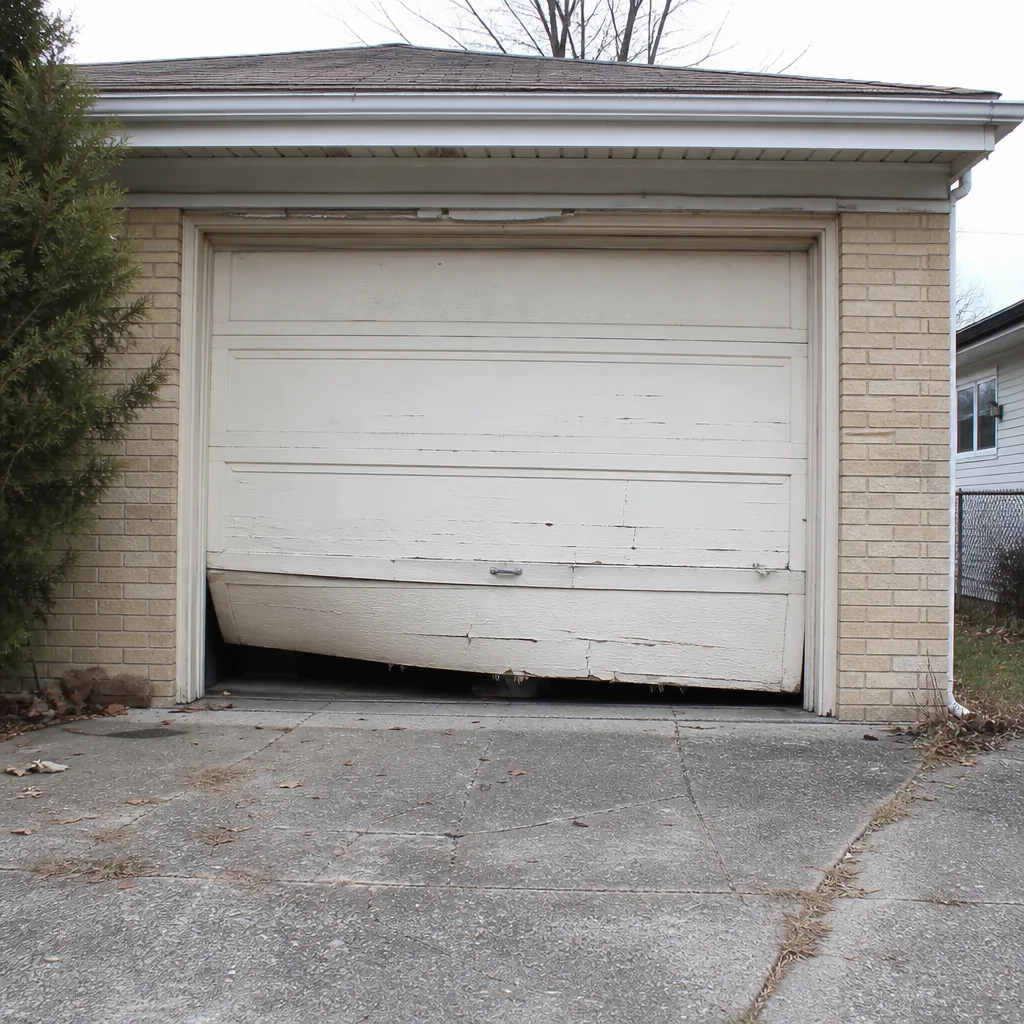 Before
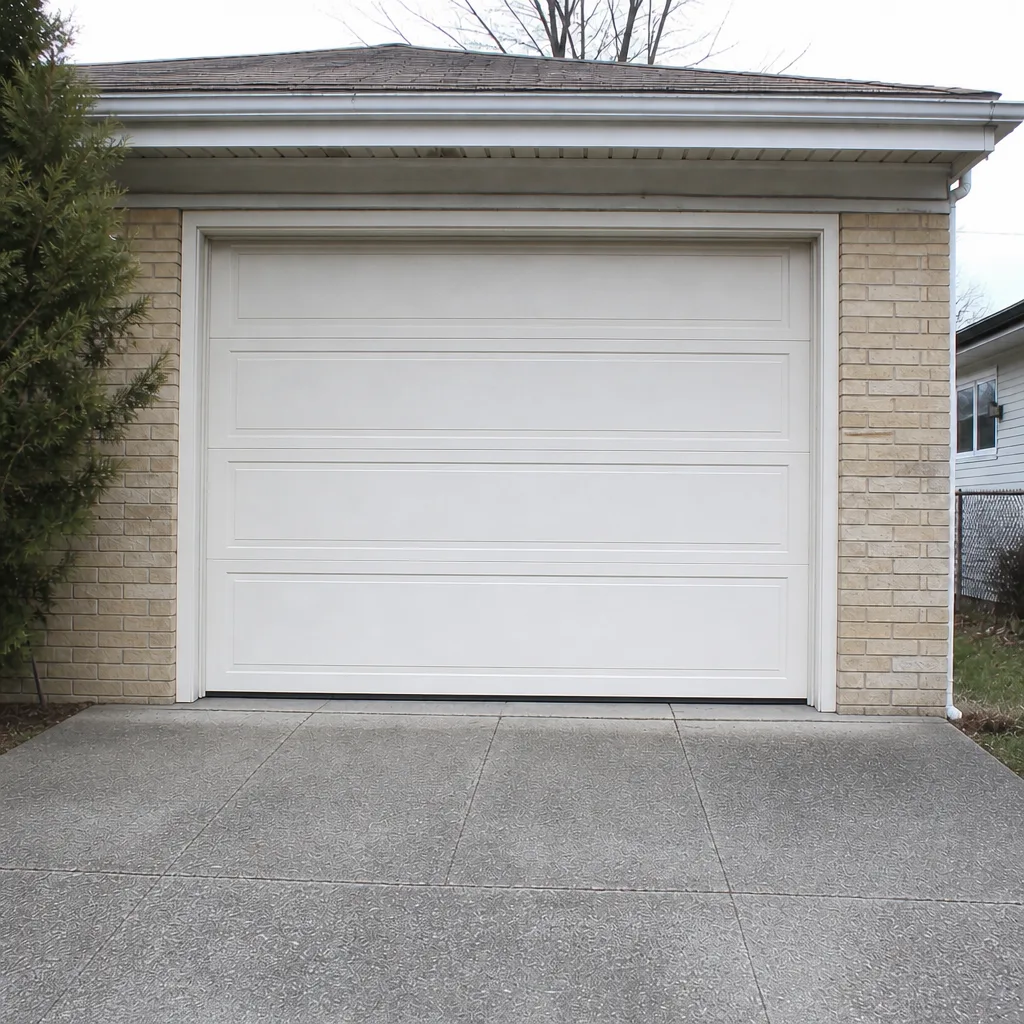 After
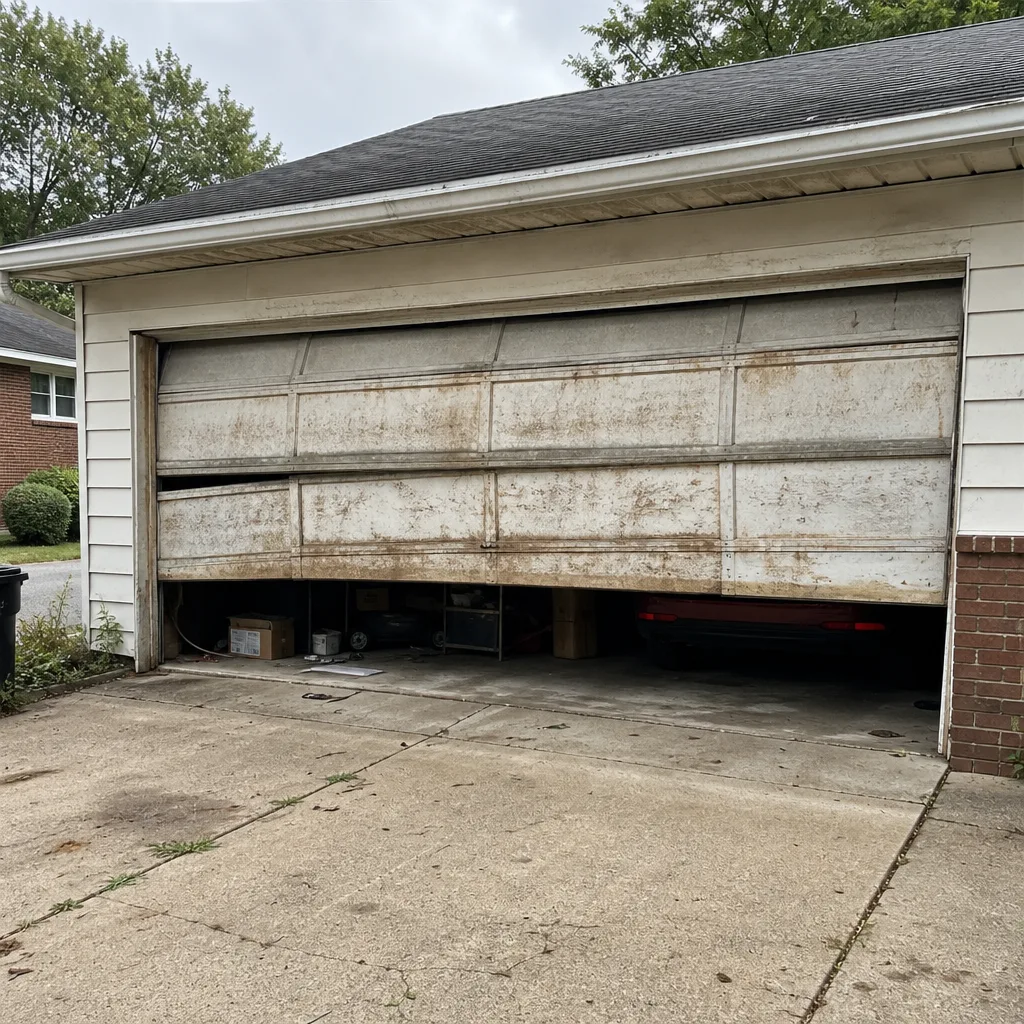 Before
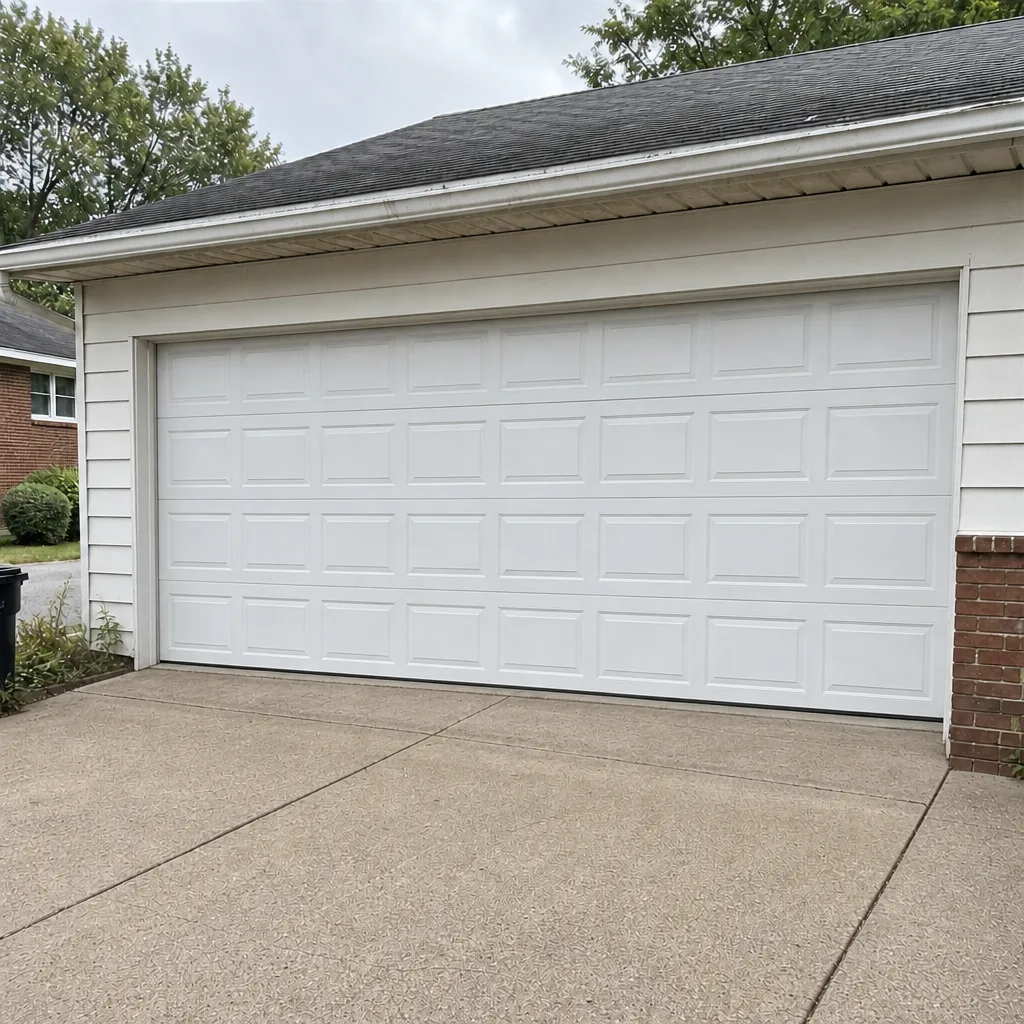 After
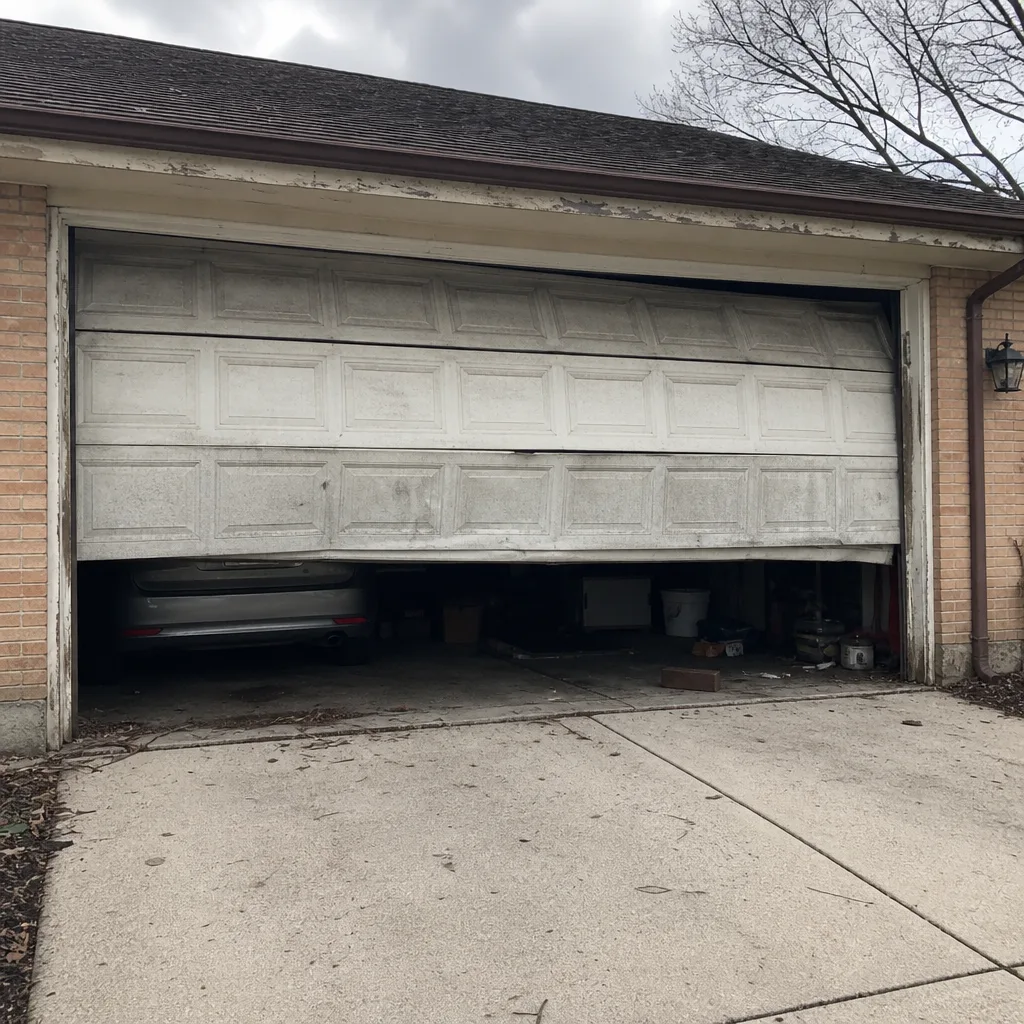 Before
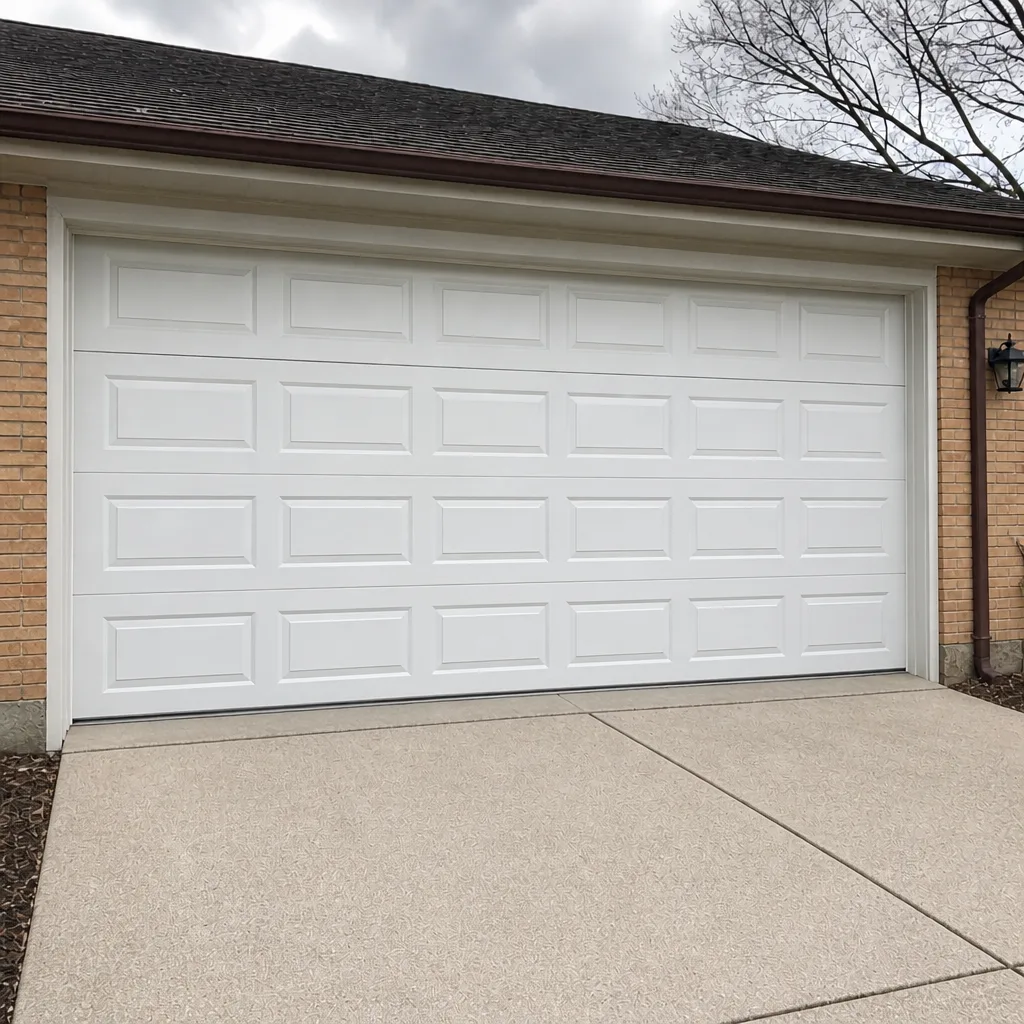 After
When to Call a Professional
Call a specialist when the door is heavy to lift, when a spring has made a loud noise or visibly failed, when the door doesn’t sit flat, when the opener is behaving erratically, or when you’re planning a replacement and need a real measurement before the estimate. Call a specialist when the hardware is old enough that you’re unsure what you have, and you’d rather know than guess. And call a specialist when you want an honest “repair or replace” read from someone who handles both.
Garage Door Repair Mount Greenwood offers free estimates in Mount Greenwood – call (855) 914-9447. We answer 24/7, with fast dispatch from 7am to 7pm, Sunday through Friday. Every price is set by a written estimate and agreed before any work starts.
Frequently Asked Questions
There’s no single number, because garage door repair is priced per job based on the failed component and the door system. A spring replacement, a roller replacement, and an opener repair are each their own job. The estimate is free, and the written quote you approve sets the price before any work begins. Call (855) 914-9447 for an exact quote – estimates are free.
Because many Mount Greenwood garages were built before the 7-foot standard door height, an off-the-shelf door often doesn’t fit the existing opening. When that happens, the fix is either a custom-size door or low-headroom hardware that matches the actual space. Either way, the decision starts with an on-site measurement.
No. We measure and inspect first, then give you a written estimate, and the work proceeds from that estimate. The price is set before work starts, not after. If the job needs more than the estimate covers, we don’t start that portion without your approval. Call (855) 914-9447 for a free estimate.
We service LiftMaster, Chamberlain, Genie, Clopay, Amarr, Wayne Dalton, Craftsman, and Raynor, and we work with those brands on both repair and installation. Brand-specific familiarity means the diagnosis is made by someone who knows the product, not someone looking it up for the first time.
Yes. Alley-access garages are common on the Southwest Side, and we handle them routinely, including the clearance, sight-line, and opener-placement considerations that come with a tight alley lot. If the door isn’t reversing properly or the opener is failing, that’s a repair call, and we can help.
We connect you with state-licensed, insured professionals who perform the work. Our technicians have up to 10 years of experience, and spring repair is done by specialists trained for it. Call (855) 914-9447 for details on your specific job.
Torsion springs run along a shaft above the door; extension springs run along the sides and stretch as the door closes. Torsion is the more common modern setup and extension is older, but both are high-tension and both should be handled by a specialist. Don’t touch either one yourself.
The Bottom Line
Mount Greenwood’s garages were built on a different set of assumptions than modern door manufacturers work with, and that’s the single most useful thing to know before you make any decision about a repair or a replacement. Measure the opening before you shop. Read the hardware before you call. Understand whether one part has failed or the whole system is past its useful life. And when the work involves springs or cables, treat it as the high-tension job it is and bring in a specialist. The rest is a straightforward choice between restoring what you have and replacing it with something that actually fits. Call (855) 914-9447 for a free estimate. We answer 24/7, with fast dispatch from 7am to 7pm, Sunday through Friday. garage door repair is the place to start if you’re unsure which side of that line you’re on.
Written by the team at Garage Door Repair Mount Greenwood.